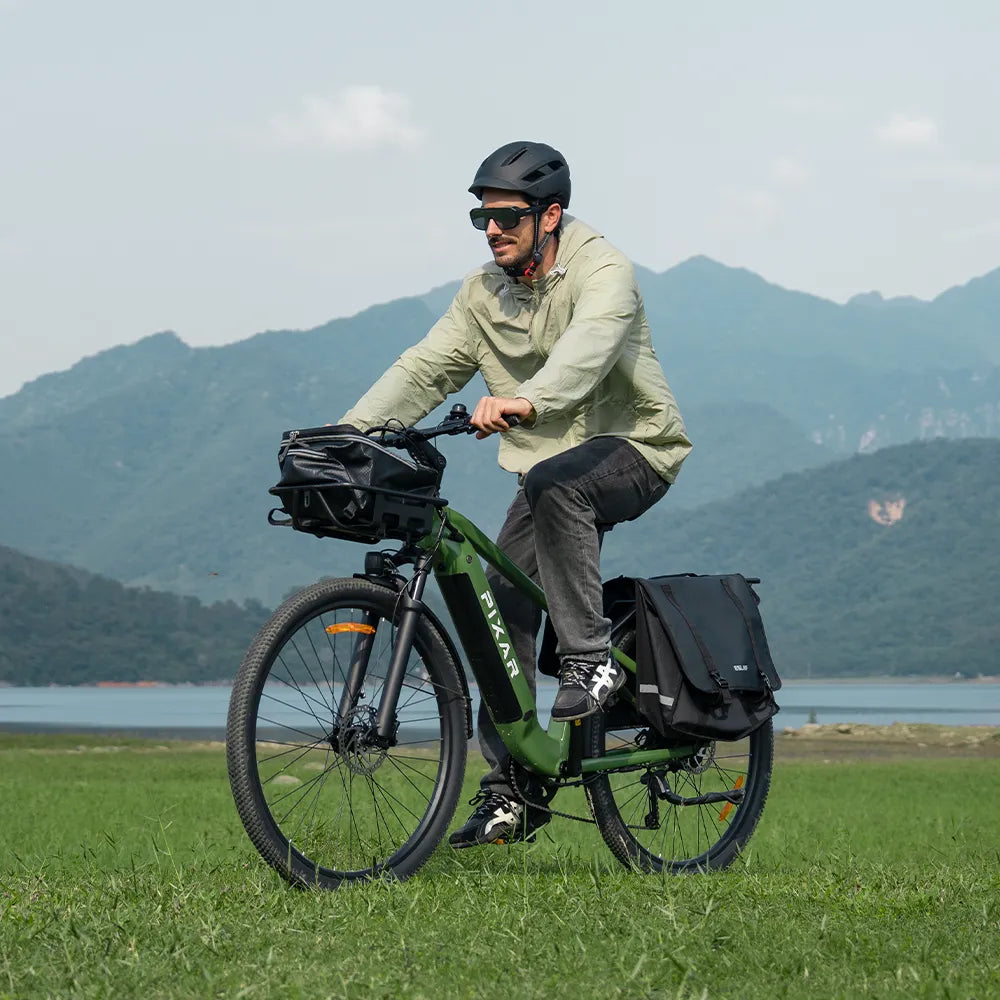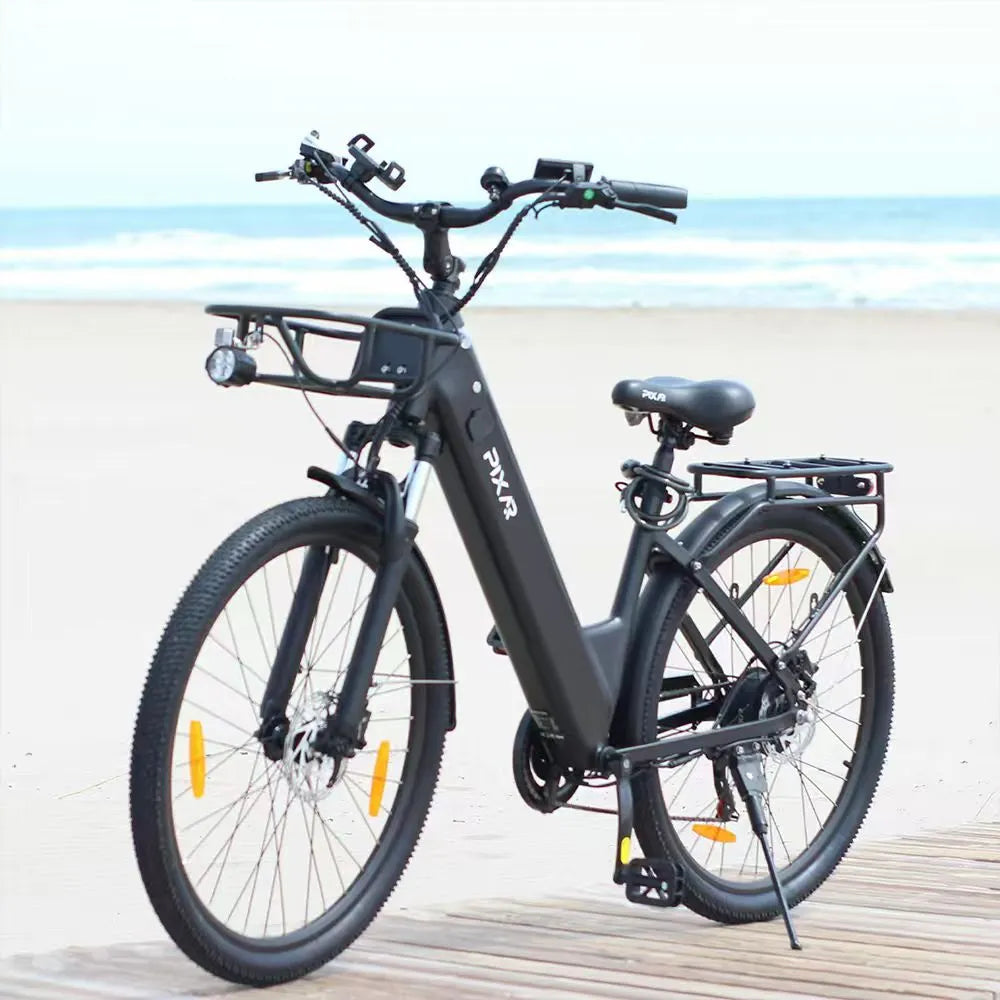


The range printed on an electric bike specification sheet is useful, but it is not a promise. Two people can ride the same bike on the same day and return with very different amounts of battery left.
That is because range depends on more than battery size. Assistance level, hills, speed, rider weight, luggage, tyre pressure and temperature all change how much energy the motor uses. The right question is not simply “How far can this electric bike go?” It is “How far will it go on the journeys I actually make?”

Start with battery capacity, not the advertised distance
Electric bike batteries are commonly described using volts and amp hours. Multiply the two figures to find the capacity in watt hours.
Volts × amp hours = watt hours
A 36 V 13 Ah battery, for example, has a nominal capacity of 468 Wh. Watt hours make it easier to compare batteries that use different voltages.
A larger battery generally gives you more range, but capacity alone does not tell the whole story. A heavier bike may use more energy when starting and climbing. Wide tyres create more rolling resistance than narrow city tyres. A rider using the highest assistance level will also consume energy faster than someone riding mainly in Eco mode.
What reduces electric bike range?
Higher assistance levels
The motor does more of the work when you select a stronger assistance level. This makes hills and headwinds easier, but it also shortens the distance available from one charge.
PIXAR’s C1 Pro illustrates the difference. In the published test, its 648 Wh battery reached up to 150 km at PAS 1 and 70 km at PAS 5. The test used an 80 kg rider on a flat road at 33°C. Those conditions matter. The figures show how strongly assistance level affects range, not what every rider will achieve.
Hills and frequent stops
Climbing requires much more energy than riding on level ground. Repeated acceleration after traffic lights also increases consumption. A hilly city commute can therefore use more battery than a longer ride on a flat cycle path.
Rider weight and luggage
The motor has to move the bike, the rider and everything being carried. Shopping, panniers, a child seat or touring equipment will all affect range. This does not mean you should avoid carrying luggage. It simply means that your planning should include a sensible reserve.
Cold weather
Lithium ion batteries usually deliver less usable energy in low temperatures. Winter range can therefore be lower than summer range, even when the route and assistance setting remain the same. Store and charge the battery according to the instructions in the owner’s manual, particularly during long periods of cold weather.
Tyres and maintenance
Underinflated tyres create extra resistance. A dry chain, dragging brake or poorly adjusted drivetrain can also waste energy. Basic maintenance will not transform a small battery into a large one, but it helps the bike use its available energy efficiently.
How much range do you need?
Start with the total distance you expect to cover between charges. Then add a reserve of about 20 to 30 percent for detours, wind, cold weather and gradual battery ageing.
If your return commute is 20 km and you can charge at home every evening, you do not need the largest battery on the market. A larger battery becomes more useful when you ride long distances, live in a hilly area, carry weight or prefer to charge less often.
Think about storage as well. Larger batteries add weight. If you need to carry the bike upstairs, a modest battery on a lighter bike may suit your life better than the longest possible range.
Comparing the PIXAR range
The figures below are manufacturer specifications, not results from one identical road test. Actual range varies with riding conditions.
| Model | Battery | Nominal energy | Published maximum pedal assist range | Best suited to |
|---|---|---|---|---|
| PIXAR Cruiser | 36 V 12.8 Ah | 460 Wh | 120 km | City riding where lower bike weight matters |
| PIXAR C1 | 36 V 13 Ah | 468 Wh | 120 km | Everyday commuting, shopping and leisure |
| PIXAR C1 Pro | 36 V 18 Ah | 648 Wh | 150 km | Longer city journeys and less frequent charging |
| PIXAR Largo | 36 V 15.8 Ah | 569 Wh | 140 km | Touring and longer mixed surface rides |
| PIXAR Rusher | 48 V 12.8 Ah | 615 Wh | 120 km | Folding storage and versatile everyday use |
| PIXAR M9 | 2 × 48 V 17.5 Ah | 1,680 Wh | 240 km | Riders who prioritise very high battery capacity |
Battery capacity and published range should always be read alongside bike weight, tyre size, riding position and intended use. The M9 has by far the largest battery capacity, but it is also a substantially heavier bike. The Cruiser has a smaller battery, yet its city focused design may be the more practical choice for shorter daily journeys.
Work backwards from your usual ride
Write down your usual return distance, the steepest part of the route and how often you are happy to charge. Add a reserve, then choose the bike that meets that need without adding unnecessary weight or cost.
The useful number is the one that gets you home comfortably on an ordinary day, with enough charge left for a change of plan.
Compare PIXAR electric bikes by battery capacity, weight and intended riding style to find the model that best matches your usual journey.
Frequently asked questions
Is the maximum range guaranteed?
No. Maximum range is measured under specified conditions. Assistance level, terrain, temperature, load and maintenance can all change the result.
Does a 500 Wh battery always travel the same distance?
No. Two bikes with similar battery capacity may have different weights, tyres, motors and riding positions. The rider and route also affect energy use.
How many miles can a 500 Wh electric bike battery last?
There is no single mileage figure. A 500 Wh battery may cover a much longer distance on flat roads with low assistance than it will on steep routes with strong motor support. Rider weight, wind, temperature and tyre pressure also matter. Use the manufacturer’s test conditions as a reference and keep a reserve for your own route.
Should I charge an electric bike after every ride?
Not necessarily. Follow the battery guidance supplied with your bike. For everyday use, charge when needed for your next journey and avoid storing a fully depleted battery for long periods.